
1-855-854-7253 Mon–Fri 9am–6pm  |  Sat–Sun 9:30am–1pm CST Get a Free Quote →

Shipping Containers for Self-Storage Facilities

Build a profitable container storage business with NPSA-member advice on container selection, bulk pricing, and facility setup.
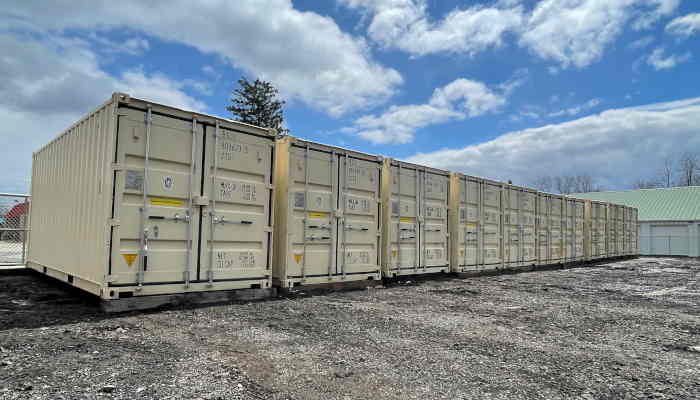
Shipping container self-storage facility

Why Shipping Containers Make Excellent Storage Units

Self-storage is a resilient, high-demand industry — and shipping container-based facilities are growing in popularity as a lower-cost alternative to traditional concrete block construction. Container facilities can be deployed rapidly, scaled incrementally, and relocated if needed — advantages traditional self-storage buildings can't match.

As an NPSA member, 4SaleContainers.com is uniquely positioned to advise storage facility operators and aspiring investors on container selection, bulk purchasing, and facility setup. We supply one-trip and used containers in bulk at competitive pricing for operators building facilities with 5 to 500+ units.

Choosing the Right Container for a Storage Facility

The most important decisions when building a container storage facility are:

One-Trip vs. Used Containers for Storage Businesses

For self-storage businesses, one-trip containers are strongly preferred. Here's why:

  • Customer perception: Rental customers expect clean, dry storage units. A one-trip container's pristine interior and exterior projects professionalism and commands higher rental rates.
  • Longevity: Used containers have already consumed 10–12 years of their active life. For a storage business built on a 20-year financial model, starting with containers that have 25+ years of life remaining is a significant operational advantage.
  • Maintenance: One-trip containers require less ongoing maintenance — less repainting, fewer repairs, better structural integrity throughout the asset's commercial life.

While WWT-grade containers cost less upfront, the total cost of ownership over a storage facility's operating life often favors one-trip units for commercial applications.

Container Sizes for Self-Storage

The most popular configurations for self-storage facilities:

  • 20ft standard: Equivalent to a 10×20 storage unit — one of the most common self-storage sizes. Ideal for individual renters storing household goods or business inventory.
  • 40ft standard or high cube: Can be subdivided into two 20ft equivalent units with a partition wall, or used as a single large-unit premium rental.
  • 45ft high cube: Maximum volume per unit — best for premium large-unit offerings or facilities targeting business customers with high-volume storage needs.

Location Selection for Container Storage

Location drives more self-storage business success than any other factor. Key considerations:

  • Visibility: Roadside visibility significantly impacts organic inquiry volume. A container facility visible from a major road gets substantially more drive-by inquiries than a tucked-away location.
  • Access: Customer access — hours, gate width, truck access — directly affects satisfaction and retention. Ensure wide enough drive lanes for large vehicles (at least 26ft for opposing traffic).
  • Zoning: Verify that your local municipality allows self-storage on the land you're considering. Zoning for self-storage can be in commercial, light industrial, or mixed-use zones — it varies significantly by jurisdiction.
  • Demographics: The 3-mile radius around your facility is your primary customer pool. Areas with high renter populations, active home sales (people between homes), and small businesses tend to generate strong self-storage demand.

Condensation Treatment

One of the most overlooked concerns in container storage operations is condensation. Temperature fluctuations cause moisture to form inside containers — potentially damaging customers' belongings and creating liability exposure. We recommend:

  • Applying a condensation-control coating to container roofs and interior walls during setup
  • Installing container vents or desiccant dehumidifier systems for climate-sensitive customers
  • Disclosing container condensation risk to renters in your rental agreement

Proprietary Locks

Offering proprietary container locks as an add-on creates an additional revenue stream and significantly improves facility security. Disc locks and puck locks designed specifically for container door hasps are difficult to cut and compatible with most container door configurations. Selling or renting proprietary locks to customers is a proven profit center for container storage operators.

Bulk Container Pricing

We offer competitive bulk pricing for storage facility operators purchasing 5+ containers. Contact our commercial sales team to discuss volume pricing, phased delivery schedules, and financing options for facility buildouts.

Storage Facility FAQ

How many containers do I need to start a storage business?

Many operators start with 10–20 containers and expand as they reach occupancy. A minimum of 20–30 units is often recommended to cover operational overhead and generate meaningful cash flow. We can stage deliveries over time to match your capital deployment schedule.

Do I need to own land to build a container storage facility?

You need access to land — ownership or a long-term lease. Landowners who already own underutilized rural or commercial land are in the best position to build a container storage facility with minimal startup cost. Ground leases from landowners are also a common arrangement for storage facility operators.

Are shipping containers better than traditional self-storage buildings?

Container facilities have lower upfront construction costs, faster deployment, and can be relocated or repurposed. Traditional buildings are permanent improvements that may appreciate with the land. Container facilities are ideal for operators testing a market before committing to permanent construction, or for those who prefer the flexibility of a moveable asset.

Ready to Build Your Storage Facility?

Talk to our commercial team about bulk pricing, phased delivery, and container selection for self-storage operators.